
Why Does the Color of an Obstacle Matter? – What You Should Know About a Horse’s Vision
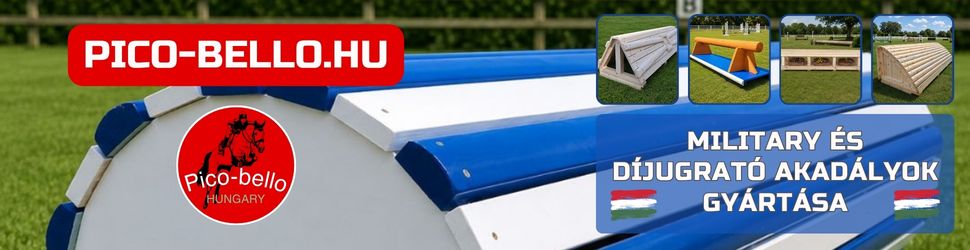
Table of Contents
At the advanced and professional levels, choosing the color of the obstacles is not merely an aesthetic consideration. The color and contrast of the poles can affect how easily the horse perceives the obstacle, so it’s important to choose colors carefully depending on the goal of the training session.
Horses see things differently than humans do, so the same obstacle may appear quite different to them.
1. How do horses see colors?
Horses have dichromatic vision, meaning they have two types of color-sensitive cone cells. According to research, primarily They perceive the blue and yellow color ranges well, whereas they cannot distinguish between reddish and orange hues as well as humans can.
However, in addition to colors, the difference in brightness plays an equally important role, and the contrast created against the backgroundto.
For example, on a grassy field, greenish or brownish poles may stand out less against the background than a brighter blue or light-colored obstacle.
2. Training Young or Inexperienced Horses
If the goal is to so that the horse can recognize the obstacle more easily, then it's a good idea to choose colors that are clearly visible and high-contrast.
Blue and yellow are often good choices, as horses can perceive these colors well. In addition, alternating light and dark stripes can help the horse more easily perceive the position of the pole.
Not only the color, but also the background is important: An obstacle with good contrast is generally easier to spot, which can boost confidence, especially in young or inexperienced horses.
3. Training Experienced Horses
At higher levels, many coaches use obstacles of various colors and designs to the horse should be exposed to as many different situations as possible even during workouts at home.
Solid-colored poles or obstacles with low contrast may require more attention from the horse, especially if they are similar in shade to the background. This can help the horse Don't rely solely on conspicuous visual cues, but approach the obstacle at a steady pace and with good balance.
However, it is important to introduce such tasks gradually, and Always adapt it to the horse's level of training.
4. The Role of the Environment
It is always best to assess the visibility of an obstacle in the context of its surroundings.
In an indoor riding arena, lighter-colored obstacles generally stand out better against dark walls or a shaded background.
On a sandy (dry) outdoor court, white or natural wood poles may provide less contrast, while Darker or brighter colors stand out more easily against the ground.
The color of the jump alone does not determine how the horse jumps, but the right contrast can help the horse recognize the jump. A deliberate choice of color can boost confidence, especially in young horses, while For more experienced horses, a variety of obstacles can contribute to a well-rounded training program.
However, the most important things are still proper training, a good rhythm, and the Balance and Consistent Riding – No obstacle color can replace the role of these.
 EN
EN  HU
HU  RO
RO  SK
SK  DE
DE